

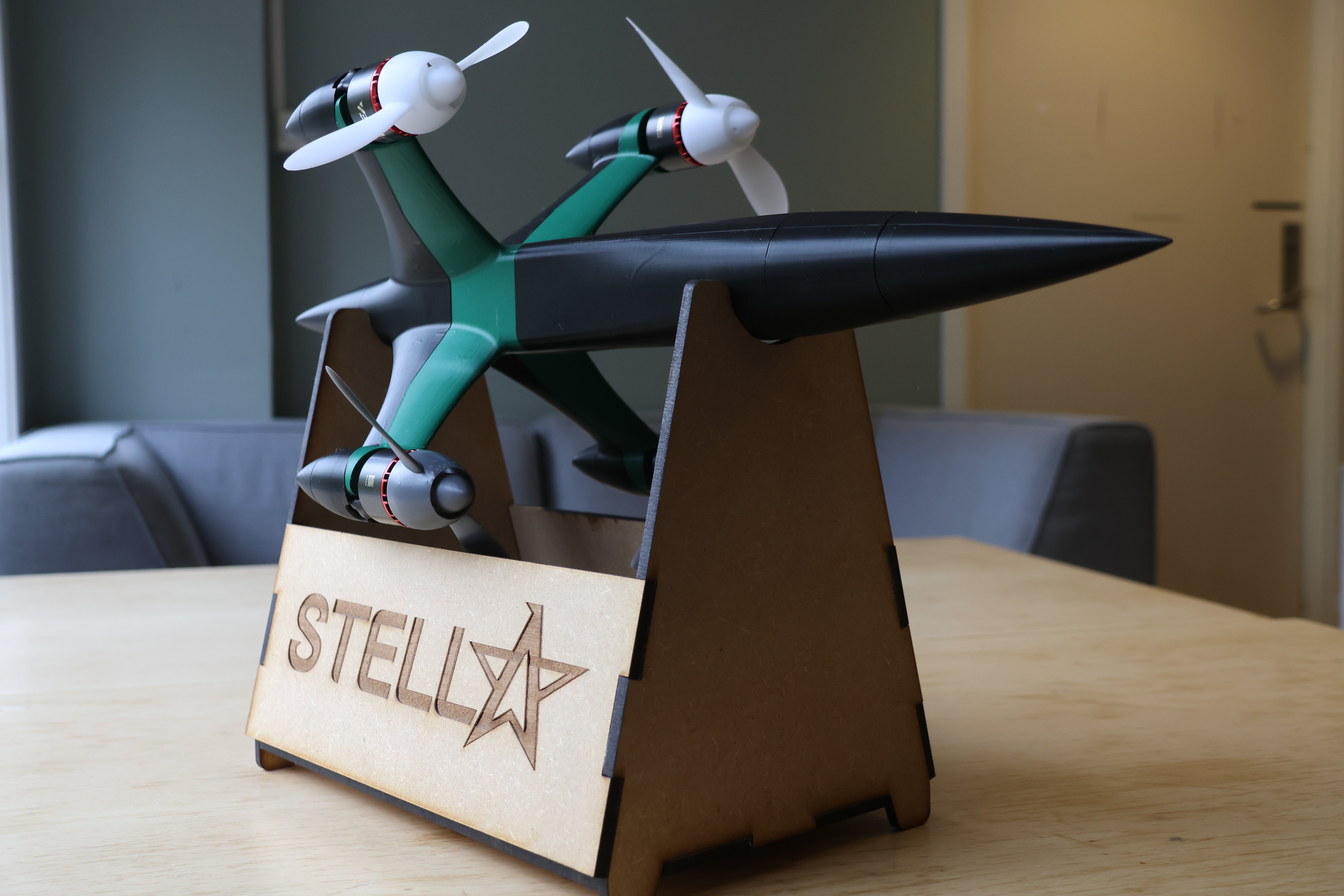
A group from NTNU is developing what they believe could become the world’s fastest fully electric drone. Through Project STELLA, the team is building a high-speed UAV platform targeting speeds above 700 km/h, with a planned attempt at a Guinness World Record already this summer.
Project STELLA began as a spontaneous idea following a student assignment on propeller design.
“It started quite impulsively right before Christmas, when I wrote a project assignment on a new type of propeller. In the drone community, there’s a trend of trying to build the fastest drone in the world,” says Marius Johannessen, co-founder and chairman of Project STELLA.
Shortly after, he reached out to former NTNU students and alumni with experience from previous engineering projects.
“I asked if they wanted to build the world’s fastest drone, and everyone said yes,” he says.
Six-month development sprint
The team consists of seven members, primarily mechanical engineering students, working on a compressed development timeline of just six months.
“We’re all master students finishing this summer, so the timeframe is extremely ambitious,” Johannessen explains.
The project is structured around a full engineering pipeline: design, simulation, production, testing, and ultimately a record attempt.
The first indoor test flight is planned within days, followed by more extensive outdoor testing in May. In early June, the team expects to conduct the official high-speed record attempt at Oppdal Airport, where controlled airspace and suitable straight-line flight conditions make it possible to safely attempt extreme-speed runs.
The team explains that finding a suitable straight flight corridor is one of the key practical challenges, as the aircraft requires a long, unobstructed stretch of airspace with safety buffers before and after the runway.
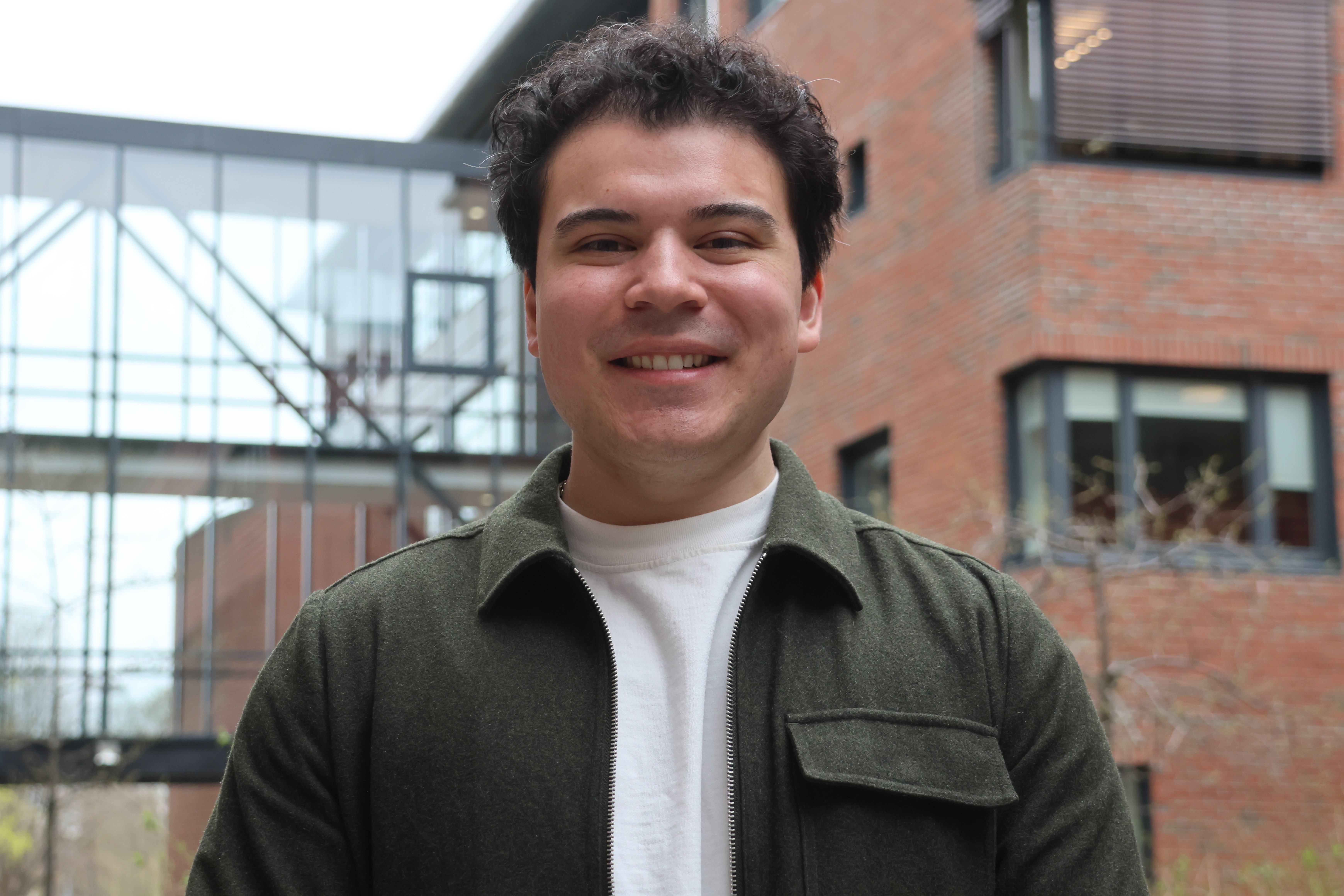
Marius Johannessen, Co-Founder & Chairman Project STELLA. Photo: Lars Bugge Aarset/Fremtidens Industri
Focus on aerodynamics and propulsion
Unlike many drone teams focused on autonomy and software, Project STELLA is primarily an aerodynamics and propulsion-driven engineering effort.
“We are all mechanical engineers, so the focus is very much on aerodynamics and structural design. This is not an autonomous drone – it is manually flown with a camera feed,” Johannessen says.
Martin Jensen, co-founder and responsible for aerodynamics, adds:
“We are pushing classical aerodynamics quite hard here. A lot of the performance comes down to very fine optimisation of geometry and airflow rather than software or autonomy.”
While the team is able to share images of the fixed-pitch propeller solution, the variable-pitch version will not be shown publicly. Due to its experimental nature, the team will not release visual material that could reveal the geometry, pitch configuration, or operating principle of the variable-pitch design.
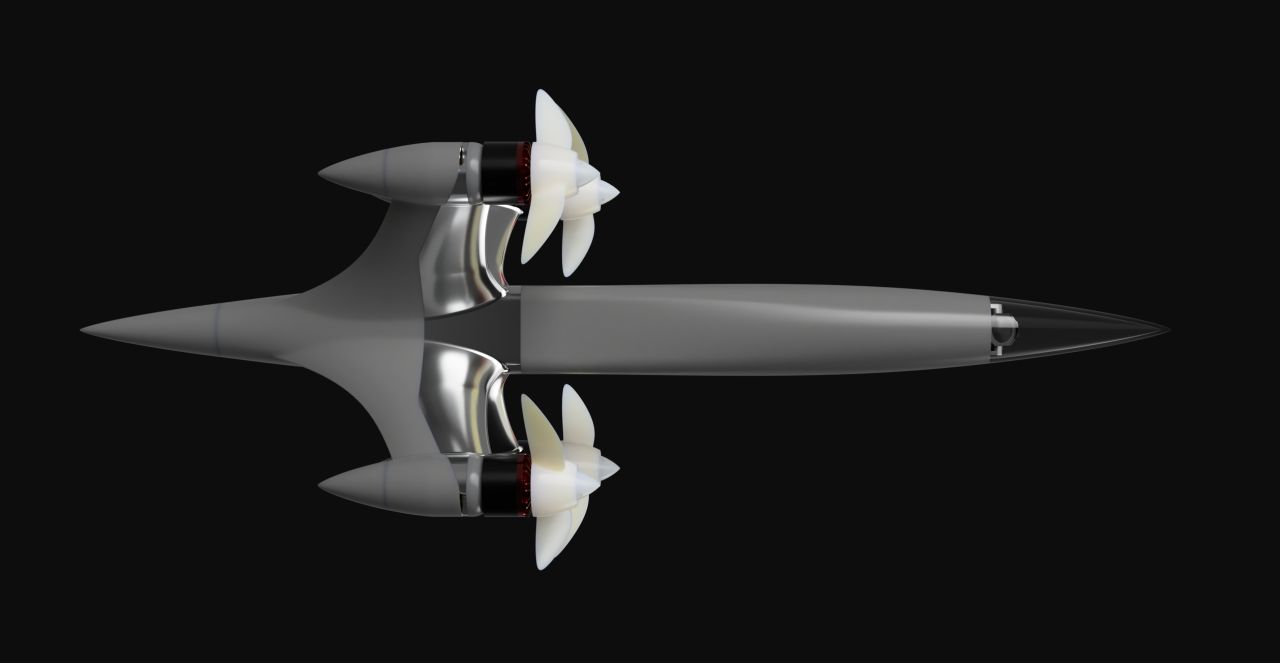
Illustration: Project STELLA
3D-printed propellers challenged assumptions
One of the most unconventional aspects of the project is the use of 3D-printed high-speed propellers – something the team says has been met with scepticism from parts of the aerospace community.
“We’ve even had feedback from aerospace engineers in Germany saying these propellers would never work because they are 3D printed. But we’ve tested them, and they do work,” Johannessen says.
The team has worked with Formlabs and industry sponsors to test resin-based propeller materials reinforced for high loads. The design features an unusually high pitch, enabling higher theoretical top speeds but increasing power demand significantly at take-off.
At peak performance, the system is expected to draw up to 16 kW.
Benjamin Jæger, responsible for design, says a major part of the work has been iterative geometry development and manufacturability:
“A lot of the design work has been about pushing shapes that are normally considered impractical into something that can actually be manufactured and tested within our constraints.”
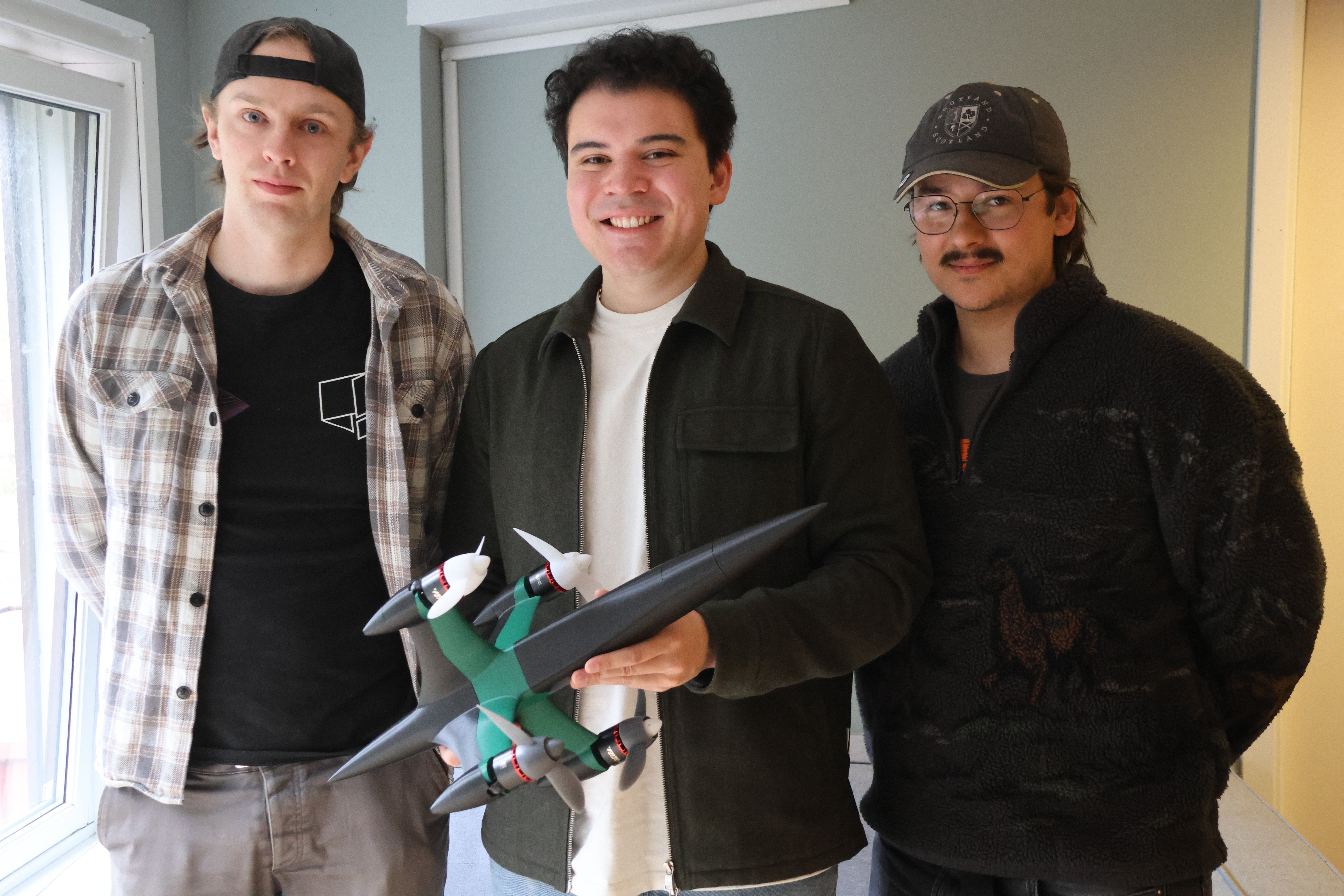
Martin Jensen , Marius Johannessen and Benjamin Jæger. Photo: Lars Bugge Aarset/Fremtidens Industri
Adaptive pitch concept
A central innovation in the project is an adaptive propeller pitch mechanism, allowing the blades to change angle during flight without an additional actuator system.
“In simple terms, I control the drone like normal, and the propellers adjust pitch based on throttle input. It’s passively reactive but still controllable,” Johannessen explains.
The mechanism is designed to improve efficiency across different flight phases – from take-off to top-speed runs.
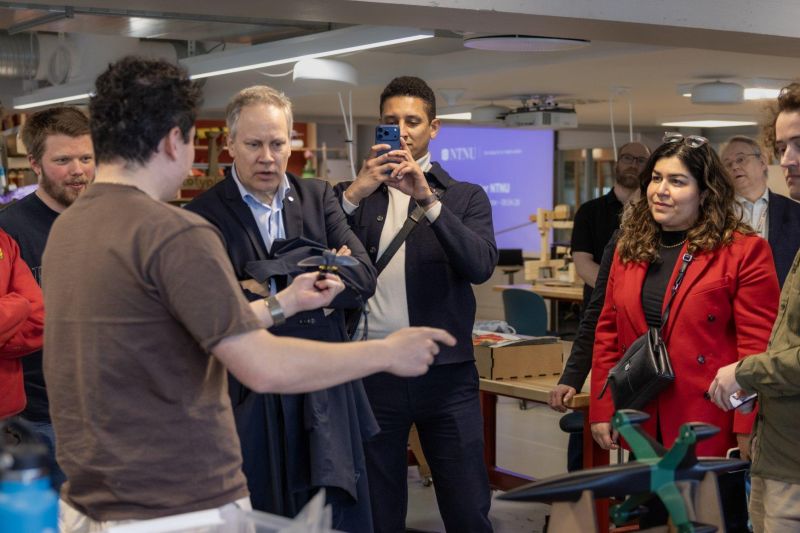
Norwegian minister of Transport Jon-Ivar Nygard visiting STELLA. Photo: Project STELLA
Targeting a Guinness World Record
The current unofficial record for a battery-powered quadcopter is around 660 km/h. Project STELLA claims simulations indicate potential speeds above 720 km/h.
The actual record flight itself is expected to last less than a minute.
“You only have a very short flight window. It’s a straight-line run, and we need to use the area before and after the runway as buffer zones,” Johannessen says.
The team notes that the aircraft transitions from a high-power take-off phase to a high-speed regime where power draw increases significantly, before battery voltage begins to drop under load.
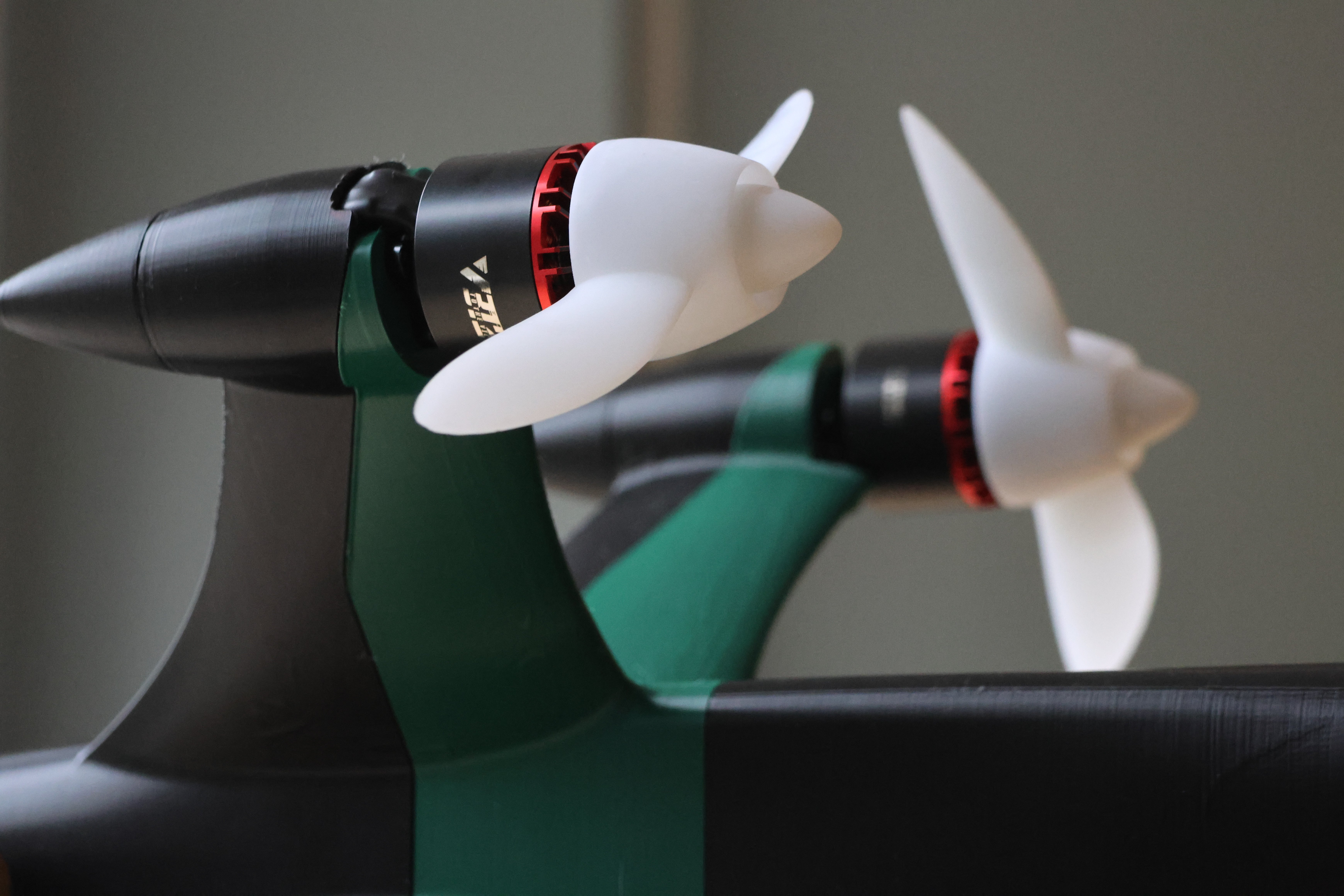
STELLA drone with fixed-pitch propeller (public configuration). The propeller has a 6-inch diameter and 24-inch pitch, rotating at up to 24,000 RPM. Photo: Lars Bugge Aarset / Fremtidens Industri
From student project to potential spin-off
Several of the students involved in Project STELLA also bring experience from Ascend NTNU, one of the university’s leading student engineering organisations.
A key partner in the project is NORDSEC member NORBIT, which provides financial support that directly enables the procurement of critical drone components. NTNU is also a important collaboration partner in both NORDSEC and Forsvarskonferansen - Nordic Defence and Security Conference, reflecting the strong links between academia, student-driven innovation, and the defence and technology industry.
While initially intended as a short-term student project ending after the record attempt, the initiative may continue in some form.
“There is still uncertainty about what happens after summer. It could end as planned, but it might also evolve into a research project or even a spin-off,” Johannessen says.
The team is also considering integrating the project into broader student engineering organisations such as Ascend NTNU.
“We haven’t fully decided yet. Right now, we’re focused on getting the drone flying and achieving the record,” he says.
“If the project continues beyond the initial record attempt, a membership in NORDSEC Nordic Defence and Security Cluster could be a natural next step,” Johannessen says.