

Propulse NTNU is preparing a new rocket launch campaign this summer, targeting a launch window in late July from Tarva, Spaceport Trøndelag.
The campaign is carried out in collaboration with the Norwegian Armed Forces and 132 Luftving at Ørland Air Station, and represents a significant step forward in the development of advanced propulsion and launch systems in Trøndelag.
.jpg?width=6960&height=4640&name=Fossekall%20Propulse%20NTNU%202026%20-%20Foto%20Lars%20Bugge%20Aarset%20Fremtidens%20Industri%20(5).jpg) Photo: Lars Bugge Aarset/Fremtidens Industri
Photo: Lars Bugge Aarset/Fremtidens Industri
Advancing liquid rocket technology
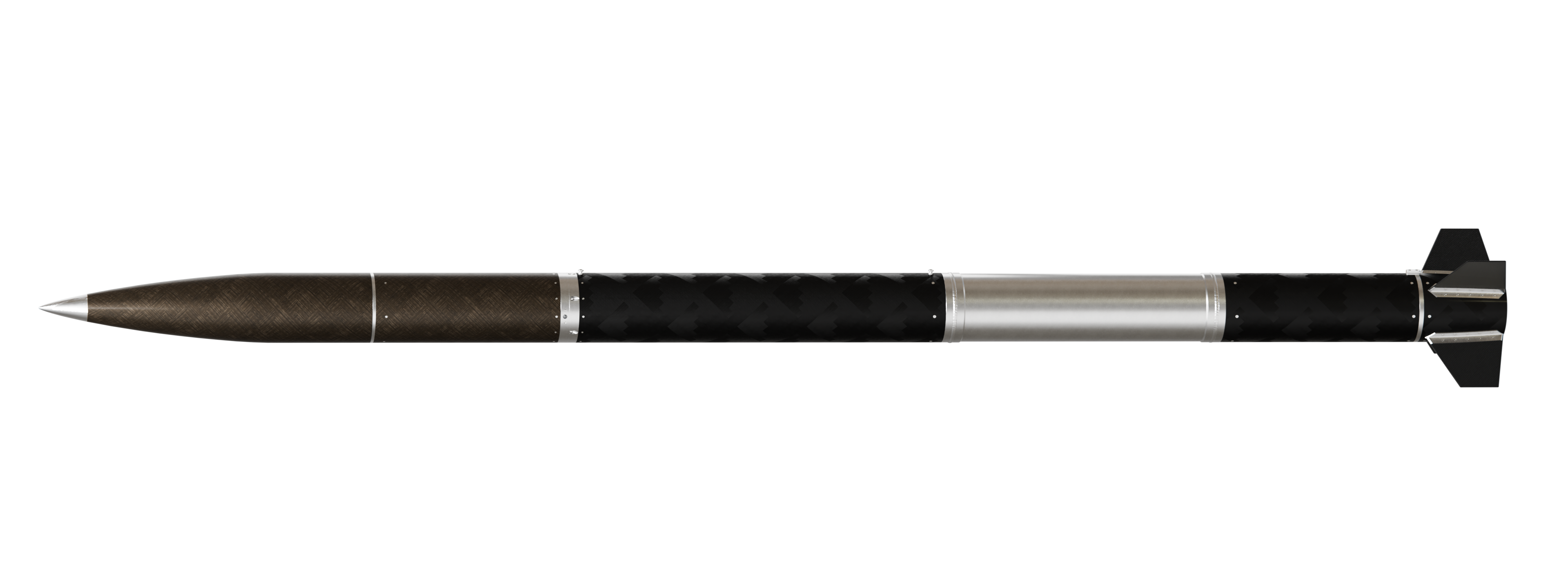
The upcoming launch is part of Project Fossekall, the most advanced rocket developed by Propulse NTNU to date. While externally similar to the previous Heimdall rocket, the new system incorporates a range of internal upgrades aimed at improving performance and control.
“The rocket will look quite similar to Heimdall externally, but internally there are many technical upgrades that we find particularly interesting to work on,” says Stian Alseth, Chairman of Propulse NTNU.
A key upgrade is the transition to an electronically regulated tank pressure system (“e-reg”), replacing earlier mechanical solutions.
“This gives us finer control and a more responsive system,” says Magnus Indrevær, Vice Chairman. “It’s a necessary step towards more advanced capabilities, such as throttling the engine.”
The rocket is powered by ethanol and nitrous oxide (N₂O), features regenerative cooling, and is designed to deliver around 8 kN of thrust, reaching a maximum altitud up to 7 kilometres.
.jpg?width=6960&height=4640&name=Fossekall%20Propulse%20NTNU%202026%20-%20Foto%20Lars%20Bugge%20Aarset%20Fremtidens%20Industri%20(18).jpg) Upcoming chairman and Launch Site Engineer Amund Rønning-Lien and Stian Alseth, Chairman of Propulse NTNU. Photo: Lars Bugge Aarset/Fremtidens Industri
Upcoming chairman and Launch Site Engineer Amund Rønning-Lien and Stian Alseth, Chairman of Propulse NTNU. Photo: Lars Bugge Aarset/Fremtidens Industri
See also: Propulse NTNU: Raketten Heimdall nærmer seg oppskyting - vil du være med på ferden?
Engineering for reliability
Rocket systems allow limited opportunities for full-scale testing, placing high demands on design validation and system integration.
“You press the button, and everything has to work,” says Alseth. “That’s the fundamental challenge.”
To address this, the team has implemented a more structured and rigorous development process, with multiple design reviews and stricter verification prior to production.
“If a design does not meet the required standards, it is iterated and reviewed again before approval,” Alseth explains.
This review structure is intended to reduce risk in a system where full-scale testing opportunities are limited.
“We’ve increased the number of design reviews and formalised the process. Each component is reviewed multiple times before manufacturing,” Alseth explains.
Testing activities this spring have included propulsion system validation, software testing of the pressure regulation system, and parachute trials at Oppdal airstrip. A new reefing parachute has been introduced to improve descent control.
The parachute system has also been tested at controlled speeds behind a vehicle and in wind tunnel environments to validate different reefing configurations before flight.
“With only one shot at launch, there is no room for failure,” Alseth adds.
See also: Vellykket oppskyting av Heimdall – et nytt skritt mot verdensrommet
.jpg?width=6960&height=4640&name=Fossekall%20Propulse%20NTNU%202026%20-%20Foto%20Lars%20Bugge%20Aarset%20Fremtidens%20Industri%20(1).jpg)
Photo: Lars Bugge Aarset/Fremtidens Industri
Time pressure and system complexity
The project involves a large, multidisciplinary team working under tight timelines, where integration across subsystems is a key challenge.
Around half of the team is replaced each year, meaning that effective development time is significantly shorter than the nominal project duration.
“It’s about getting the entire timeline to come together,” says Indrevær. “You need everything tested and ready at the right time, especially when introducing new technology.”
.jpg?width=960&height=640&name=Propulse%20Heimdall%20Launch%20Tarva%20-%20Photo%20Lars%20Bugge%20Aarset%20NORDSEC%20(21).jpg)
From launch of Heimdall in 2025. Photo: Lars Bugge Aarset/Fremtidens Industri
See also: Kansellert rakettoppskyting fra Tarva: Vurderer mulighetene for nytt forsøk
Part of a growing defence and space ecosystem
Despite being a student organisation, Propulse NTNU operates at a level comparable to advanced engineering initiatives, with strong relevance for defence, space, and high-performance systems development.
The organisation’s development model relies heavily on structured design reviews, including concept, preliminary and critical design reviews, as well as dedicated component-level review gates before production.
Propulse NTNU is part of the NORDSEC Defence and Security Cluster, alongside Ascend NTNU and Orbit NTNU. All three will also participate in the upcoming Forsvarskonferansen - Nordic Defence and Security Conference, reflecting their growing role in Norway’s defence-related technology ecosystem.
.jpg?width=6960&height=4640&name=Propulse%20Heimdall%20Launch%20Tarva%20-%20Photo%20Lars%20Bugge%20Aarset%20NORDSEC%20(36).jpg)
From launch of Heimdall in 2025. Photo: Lars Bugge Aarset/Fremtidens Industri
Several NORDSEC member companies are also among Propulse’s collaboration partners, including EmLogic, Radionor Communications and NORBIT, reflecting strong industry engagement from across the cluster.
The planned launch at Tarva further highlights Trøndelag’s emergence as a test arena for advanced aerospace capabilities, supported by collaboration between industry, academia, and the Armed Forces.
For NORDSEC members, initiatives like Propulse NTNU demonstrate how early-stage technology development and hands-on system integration contribute directly to future competence in critical domains.
See also: Propulse NTNU gjør nytt rakettforsøk
.jpg?width=6960&height=4640&name=Fossekall%20Propulse%20NTNU%202026%20-%20Foto%20Lars%20Bugge%20Aarset%20Fremtidens%20Industri%20(4).jpg)
Project Fossekall
- Height: 5.2 m
- Diameter: 246 mm
- Wet mass: 134 kg
- Thrust: 8 kN
- Burn time: 10 seconds
- Maximum altitude: up to 7 km
- Engine: Regeneratively cooled
- Propellants: Ethanol and nitrous oxide (N₂O)
- Propellant mass: 40 kg
.jpg?width=6960&height=4640&name=Fossekall%20Propulse%20NTNU%202026%20-%20Foto%20Lars%20Bugge%20Aarset%20Fremtidens%20Industri%20(11).jpg)
Photo: Lars Bugge Aarset/Fremtidens Industri
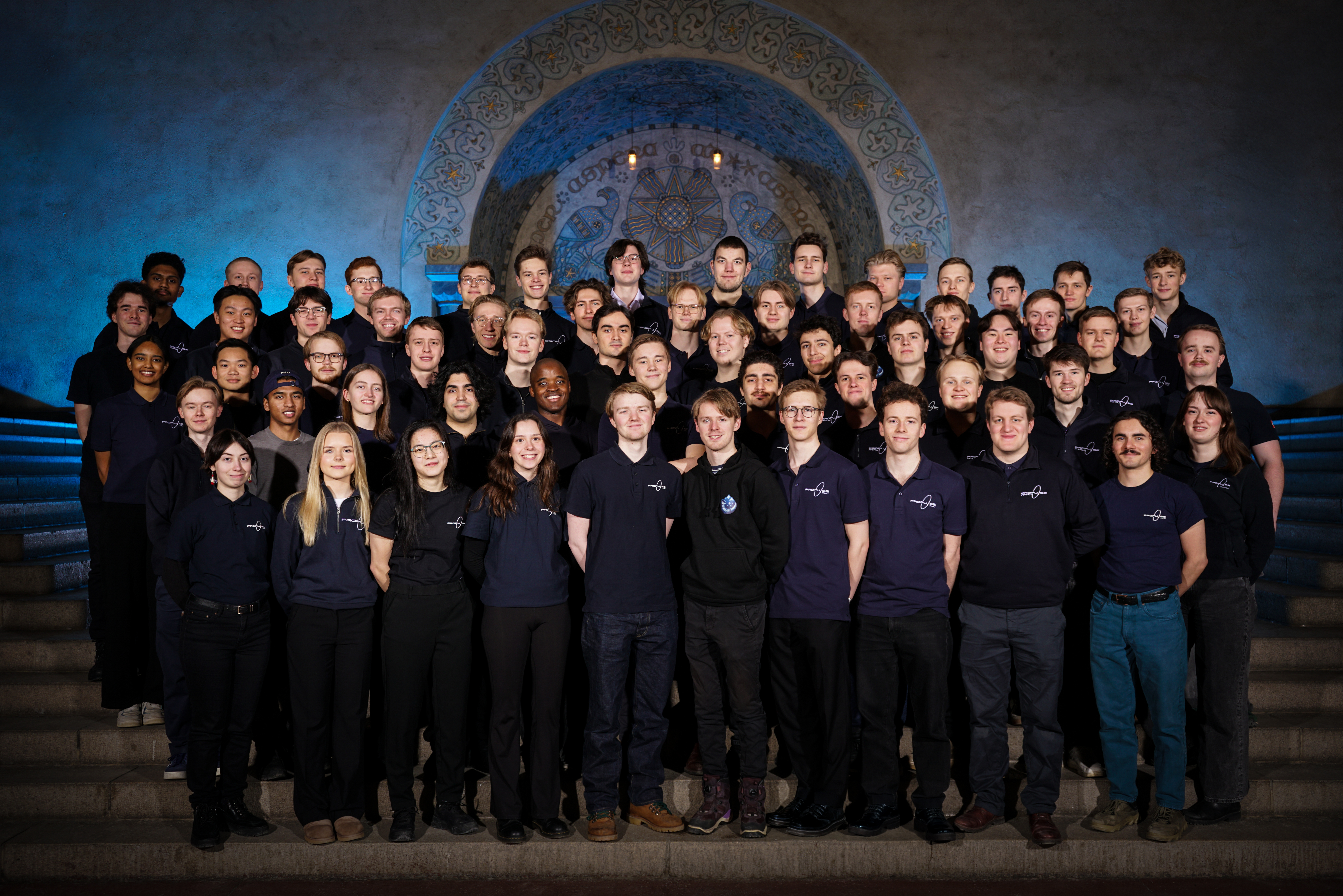
Team 2026 Fossekall. Photo: Propulse NTNU