

After a postponed launch in January, students at Orbit NTNU are preparing for a new attempt to put their Trondheim-built satellite FramSat‑1 into orbit. The mission is scheduled within two upcoming launch windows: 19–29 March or 8–19 April, aboard Isar Aerospace’s Spectrum rocket from Andøya Spaceport.
The new launch window opens no earlier than 19 March after engineers resolved a pressurization valve issue that caused the January launch attempt to be postponed. The launch remains subject to weather conditions and range availability.
ISAR's mission for Flight 2, called “Onward and Upward”, could become a historic milestone: the first successful orbital launch of a satellite rocket from mainland Europe, entirely student-built.
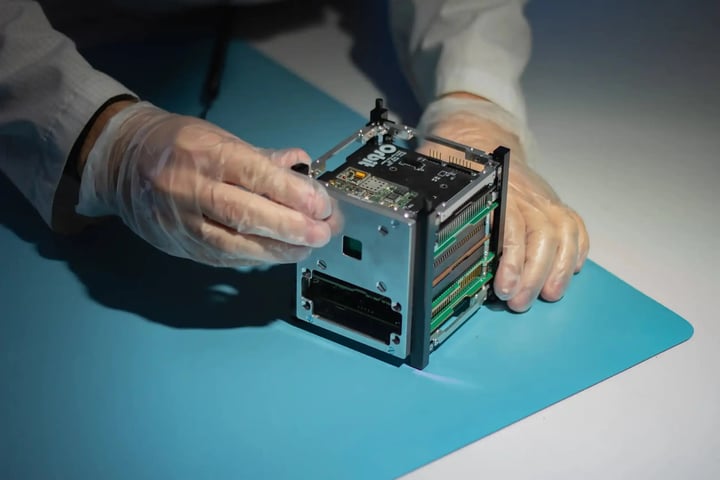
FramSat‑1 is a 1U CubeSat. Photo: Orbit NTNU
Small satellite, big ambition
FramSat‑1 is a 1U CubeSat, measuring 10 × 10 × 10 cm and weighing 1.3 kg. Development has taken almost five years, driven entirely by student volunteers at Orbit NTNU. The satellite will test advanced Norwegian technology, including a sun sensor developed in collaboration with EIDEL and the University of Oslo.
Herman Castberg, FramSat-1 Project Manager, Orbit NTNU:
"By developing our own in-house systems on volunteer hours, we are in a unique position to launch satellites that would not be attractive based purely on commercial mission objectives. These satellites include several advanced systems and are built by Norwegian students, providing the best possible platform for learning. In doing so, we are educating and developing the space talent of tomorrow."
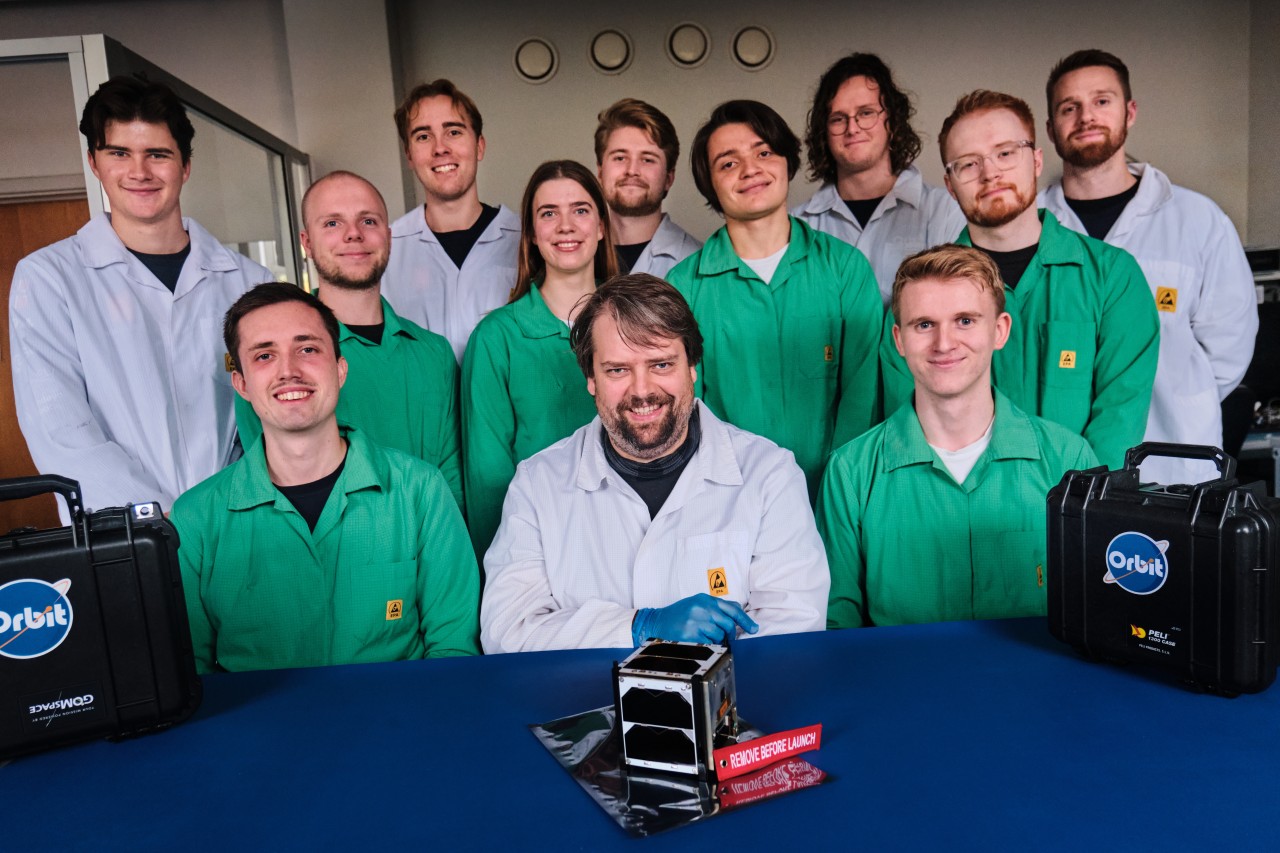
Team Framsat-1 Photo: Orbit NTNU/Magnus Kolstad
FramSat‑1 and its sister satellite, FramSat‑1.5, will verify sensors provided by sponsor Eidsvoll Electronics AS. The project offers students hands-on experience with complex space systems that would normally be expensive on commercial solutions. After launch, the satellite will be tracked and monitored via ground stations in Norway.
"This project builds on a scaled-down version of SelfieSat, a satellite we previously launched. But FramSat is, dear I say, far more ambitious and educational in its scope, as the first Norwegian satellite launched from Norwegian soil. It gives students the chance to design, develop, and operate a satellite from start to finish, solve problems, and then watch it fly."
Orbit NTNU’s SelfieSat was launched in 2022 and operated until 2024, providing valuable lessons for FramSat‑1.
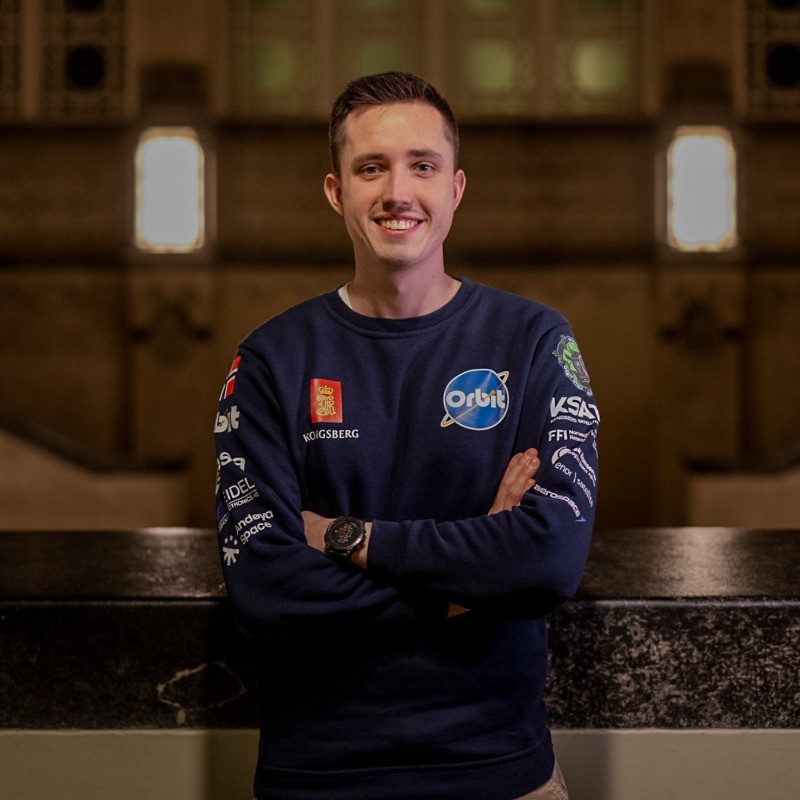
Herman Castberg, FramSat-1 Project Manager. Photo: Orbit NTNU
Trondheim students and Norwegian New Space
Helga Therese Tomaszewski Vrenne, newly elected leader of Orbit NTNU, comments:
"Projects like FramSat demonstrate what can be achieved through initiative, collaboration, and a strong culture of learning by doing. By designing and building satellites as a student-driven organization, we show how voluntary engagement and technical curiosity can contribute to developing the next generation of expertise in Norway's growing space sector."

Helga Therese Tomaszewski Vrenne. Photo: Orbit NTNU
The upcoming launch highlights the strength of the Trondheim and Norwegian space ecosystem. Orbit NTNU is a member of NORDSEC Defence and Security Cluster and participates in the Norwegian Defence Conference, presenting both student-developed space technology and collaborations with industry.
.jpg?width=960&height=640&name=ESA%20BIC%20NTNU%20Foto%20Lars%20Bugge%20Aarset%20(8).jpg) Space manager at ESA BIC, Linda Cathrine Hald. Photo: Lars Bugge Aarset/Fremtidens Industri
Space manager at ESA BIC, Linda Cathrine Hald. Photo: Lars Bugge Aarset/Fremtidens Industri
Linda Cathrine Hald, Space Manager at ESA BIC Trøndelag and Fremtidens Industri, says:
“The FramSat‑1 launch illustrates the strength of the Trøndelag and European space ecosystem. Student environments like Orbit NTNU show how advanced space technology can be developed at the intersection of research, education, and industry. This positions Trondheim as Norway’s technology capital and an important part of Europe’s future space and security efforts.”
.jpg?width=1280&height=959&name=Orbit%20NTNU%20-%20Magnus%20Kolstad%20(3).jpg)
FramSat‑1. Photo: Orbit NTNU/Magnus Kolstad
Looking ahead
With Andøya Space supporting operational and safety procedures, FramSat‑1 is ready to put Trondheim student ingenuity into orbit — literally. The launch is a key step for both the students involved and Norway’s growing role in European small-satellite missions.
The flight is part of Isar Aerospace’s “Onward and Upward” mission, designed to validate critical systems of the Spectrum launch vehicle during operational conditions and demonstrate Europe’s growing independent launch capabilities.
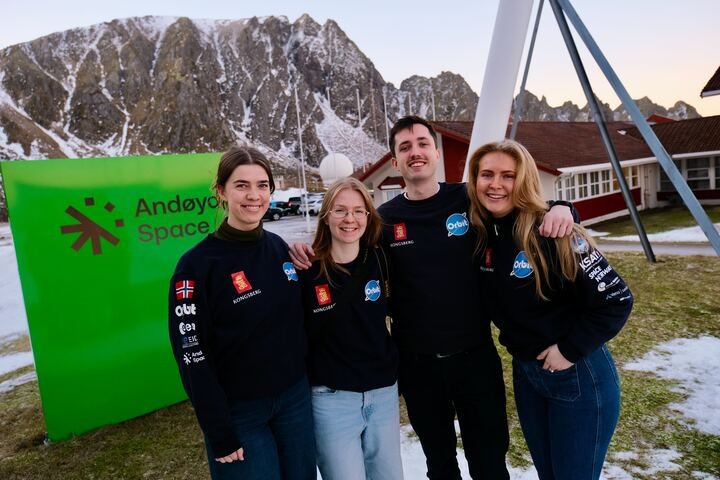
Team Orbit NTNU at Andøya Space, Januar 2026. Photo:Orbit NTNU
About Orbit NTNU
Founded in 2018 at NTNU in Trondheim, Orbit NTNU is Norway’s largest student-led space organisation. Students design, build, and operate small satellites and suborbital payloads in collaboration with industry partners. Orbit NTNU emphasizes hands-on learning, sustainability, and interdisciplinary teamwork, preparing students for careers in space and high-tech industries.
The organisation has led multiple satellite missions, including SelfieSat and FramSat‑1, and is also cooperating with the European space innovation ecosystem through ESA BIC, node Trøndelag.
.jpg?width=1280&height=959&name=Orbit%20NTNU%20-%20Magnus%20Kolstad%20(2).jpg) Herman Castberg, FramSat-1 Project Manager. Photo: Orbit NTNU/Magnus Kolstad
Herman Castberg, FramSat-1 Project Manager. Photo: Orbit NTNU/Magnus Kolstad