
Flying at around 100 km/h, covering distances of up to 32 kilometres and autonomously locating people and delivering critical supplies: Ascend NTNU is taking on an ambitious autonomous drone challenge. At the same time, the student organisation is becoming an increasingly important arena for developing the engineering talent Norway's rapidly growing drone industry needs.
Ascend NTNU is a technical student organisation developing advanced autonomous drones and competing in international competitions. Alongside their studies, students gain hands-on experience with autonomy, perception, control systems, electronics and mechanical design.
Several NORDSEC member companies are also partners of Ascend NTNU, including Aviant, Teledyne FLIR, DK Nejet and NORBIT. Several of these were on site at Ascend NTNU's Concept Review 2027, where the students presented the concepts behind their next autonomous aircraft. Among those attending were Aviant, Teledyne FLIR and DK Nejet. The close relationship illustrates how Ascend has become both a technology development arena and an important source of competence for Norway's fast-growing drone industry.
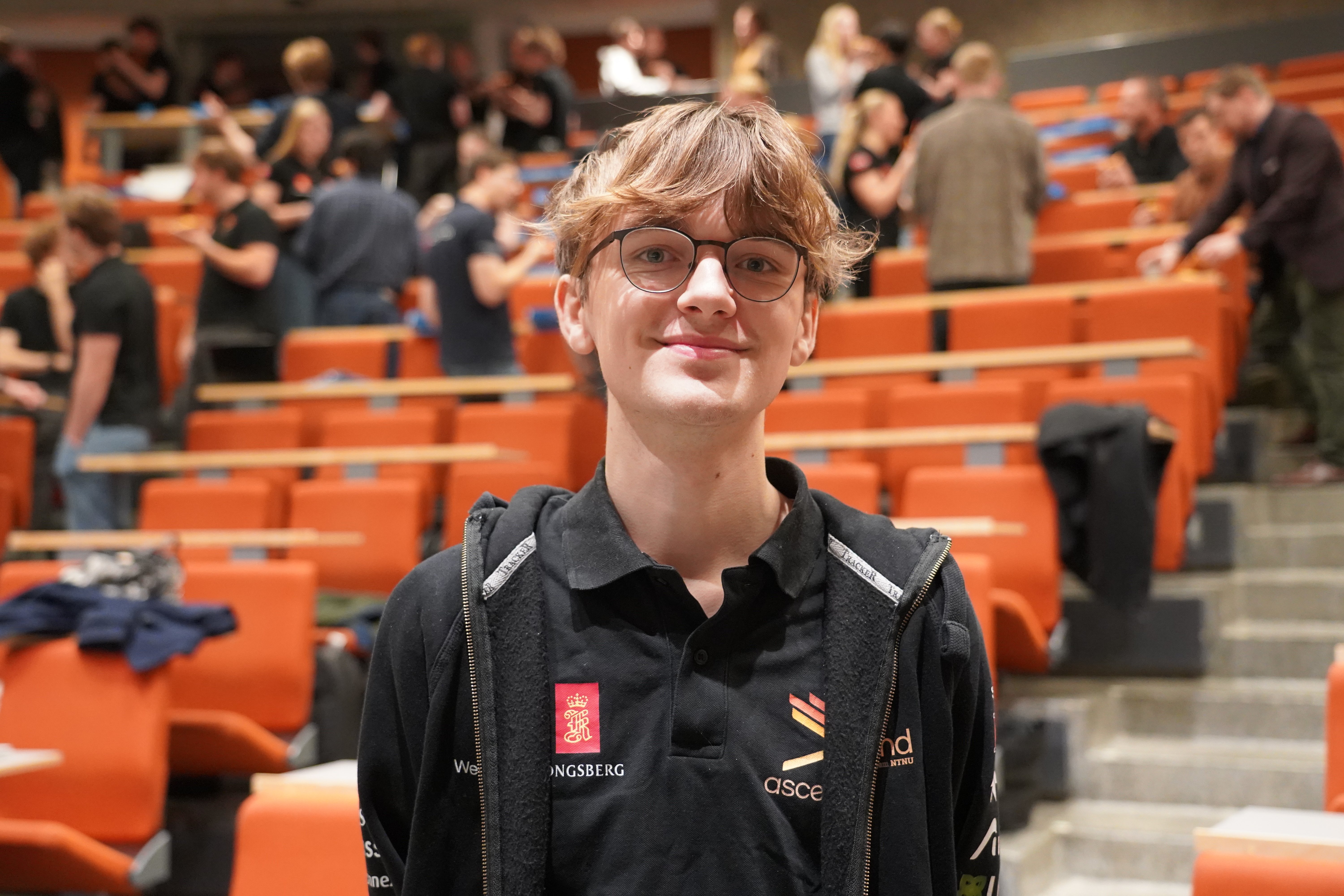
Magnus Erik Weedon-Fekjær, Chief Engineer at Ascend NTNU. Photo: Lars Bugge Aarset/Fremtidens Industri
The aircraft is being developed for the Student Unmanned Aerial Systems Competition, SUAS, where teams from around the world are challenged to design and operate advanced autonomous aerial systems.
“We want to win the whole thing and be the best,” says Magnus Erik Weedon-Fekjær, Chief Engineer at Ascend NTNU.
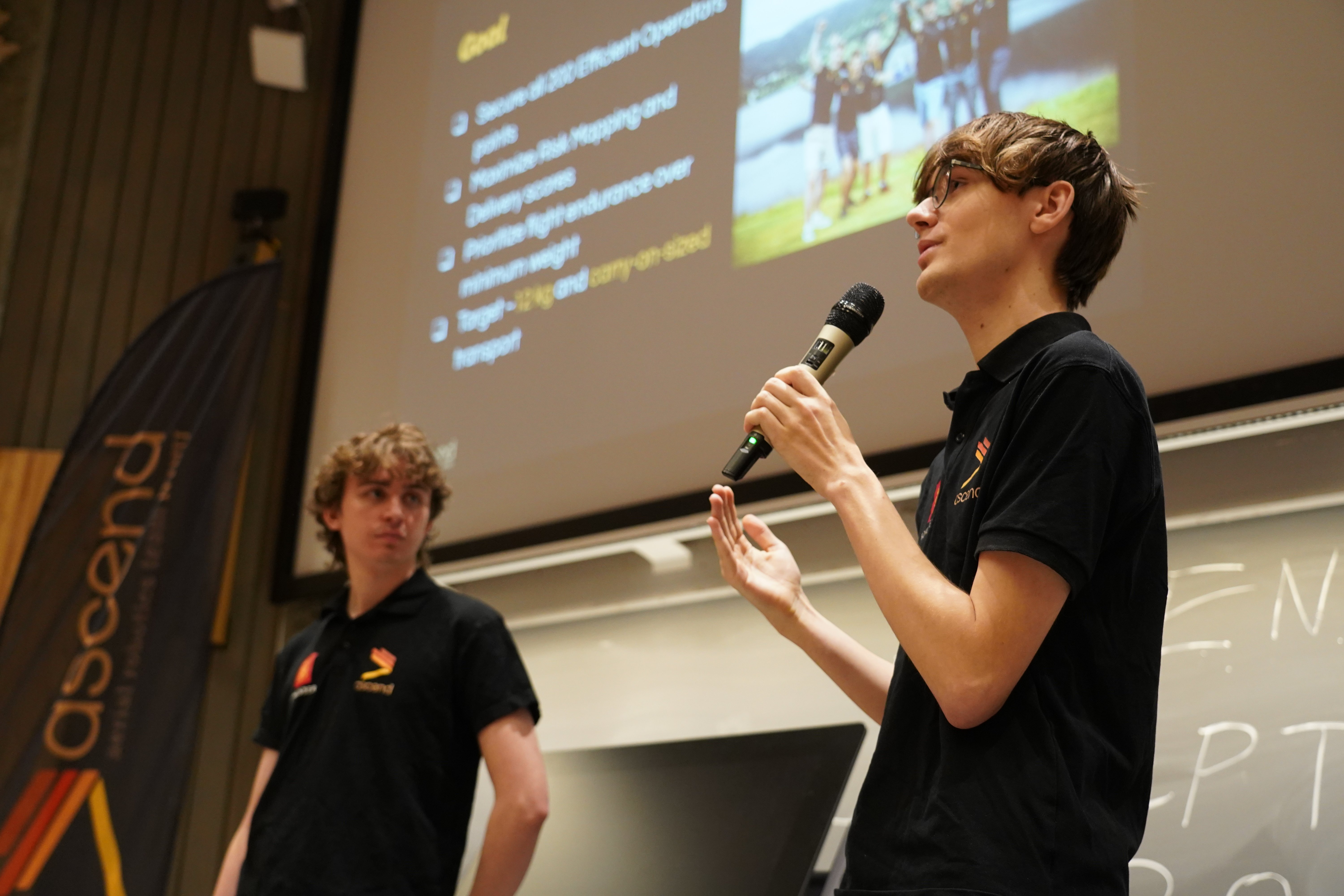
And the challenge is considerable. The aircraft must be able to fly long distances, autonomously map an area, identify targets and other aircraft, and complete several different tasks. One of the missions is to autonomously locate a person in an area that is difficult to access and deliver essential supplies, such as medicine or water, to that person.
Speed, range and autonomy
One of the toughest challenges is combining long range and high speed with low weight and advanced autonomous capabilities.
According to Weedon-Fekjær, the aircraft must be capable of flying up to 32 kilometres. It must also survey a large area, detect targets and complete the required tasks within tight time constraints.
“To do this, the drone needs to fly at around 100 kilometres per hour. That is a challenge in itself when you also have to map the area and detect other drones at the same time,” says Weedon-Fekjær.
Every kilogram matters. Batteries, sensors, computing equipment and payload all add weight, while the team wants to make the aircraft as light and compact as possible without sacrificing range or capability.
Solving the challenge requires several highly specialised disciplines to work together as one system. Computer vision and perception must feed information to the autonomy and control systems, while the electrical and mechanical systems must support an aircraft designed to fly fast, far and autonomously.
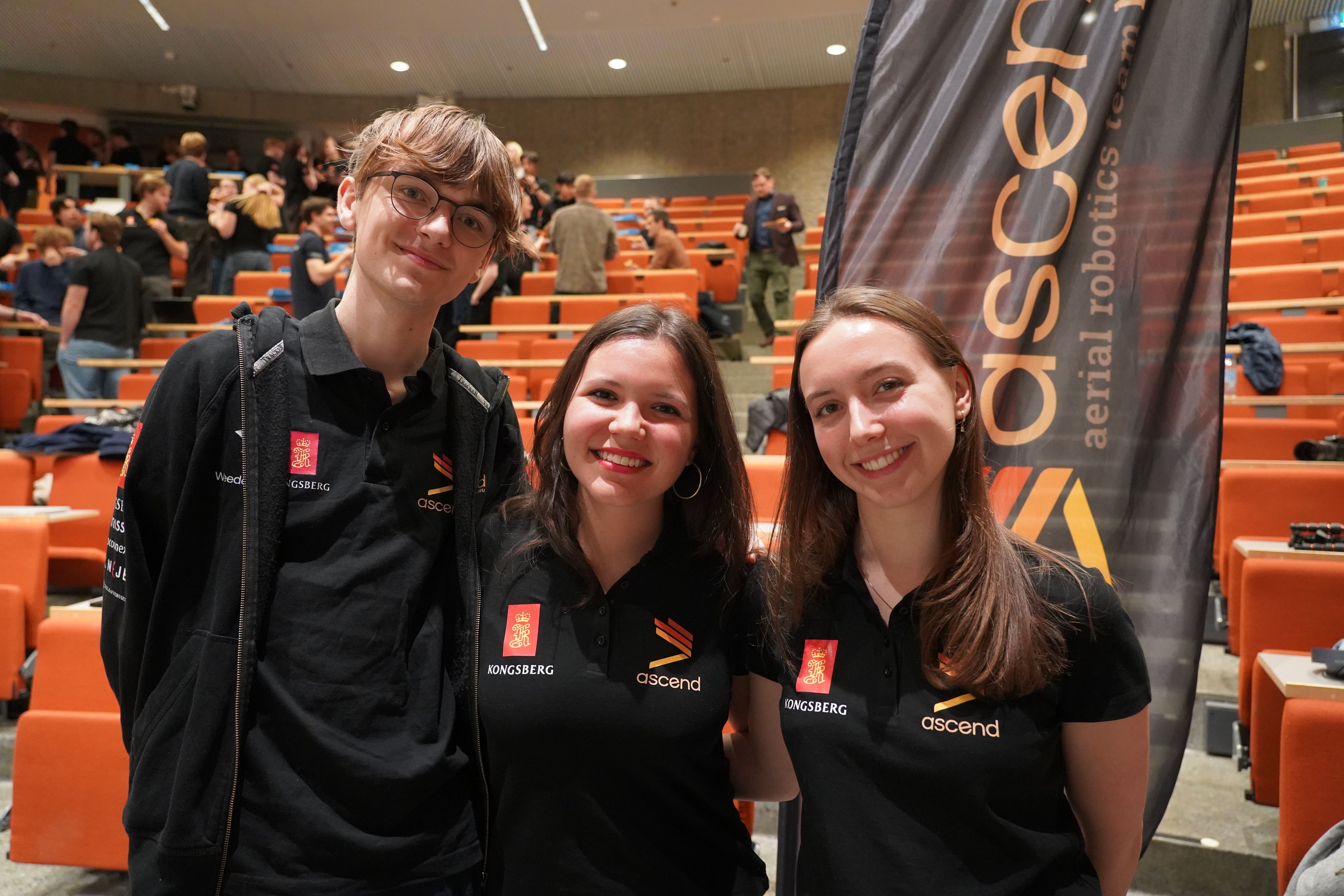
Magnus Erik Weedon-Fekjær, Chief Engineer, Charlotte Schreiner, Deputy Leader and Selina Bolme, Leader of Ascend NTNU. Photo: Lars Bugge Aarset/Fremtidens Industri
A unique learning arena
For Selina Bolme, Leader of Ascend NTNU, winning competitions is only part of the purpose.
“What we really do is educate engaged engineers. Ascend is a learning platform alongside the studies, where students can gain practical experience, work on real challenges and get in contact with industry,” says Bolme.
That close connection with industry is fundamental to Ascend. Sponsors provide funding, components and technical expertise, while former members have gone on to work for several of the companies supporting the organisation.
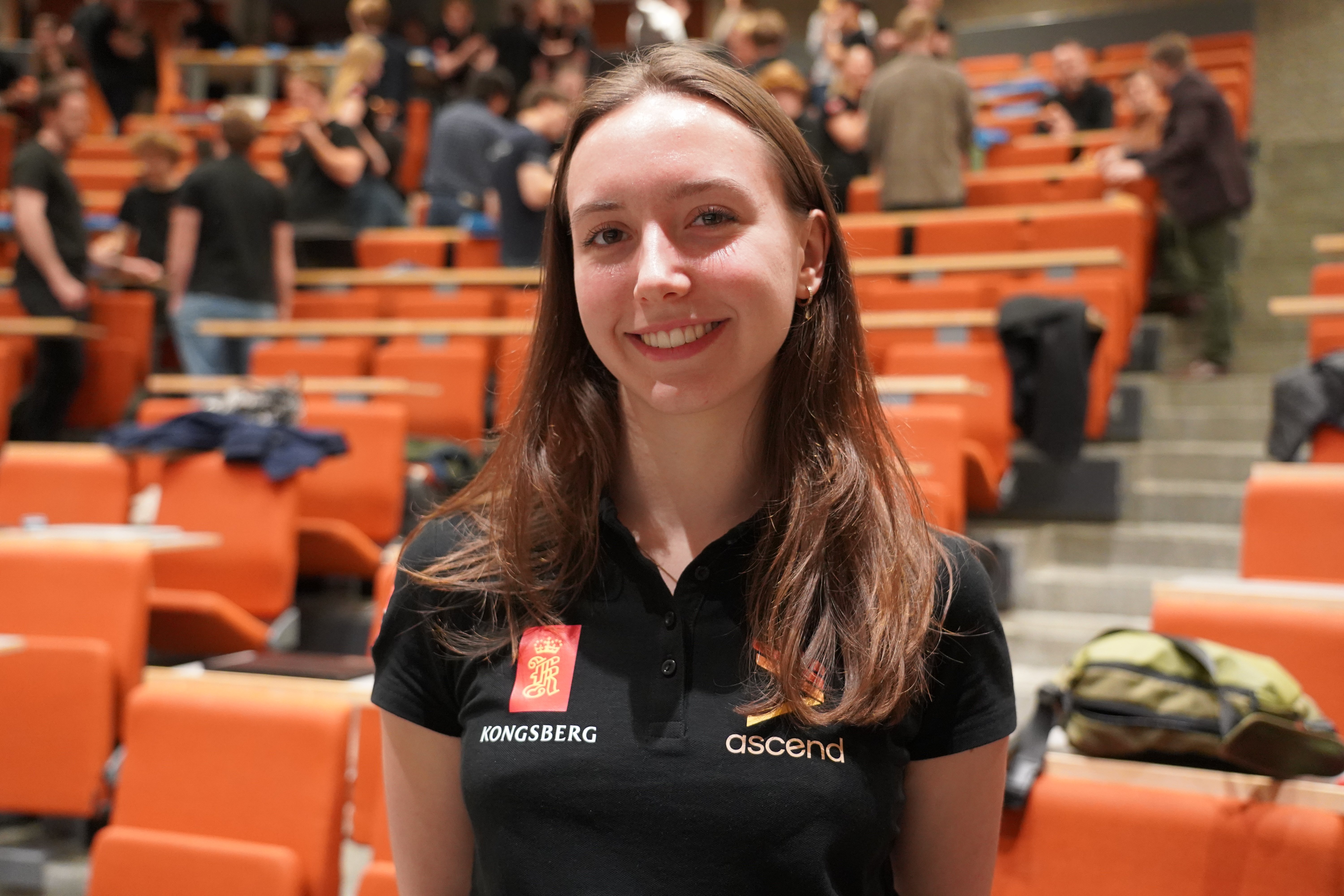
Selina Bolme, Leader of Ascend NTNU. Photo: Lars Bugge Aarset/Fremtidens Industri
Oskar Norevik Meldal, UAV Engineer at Aviant, knows that transition first-hand. He is himself a former member of Ascend NTNU.
“The fact that it is voluntary means a lot. The students are here because of their own motivation and because they are passionate about the project. What we see today represents many weeks of hard work, thorough research and learning,” says Meldal.
For Meldal, one of Ascend's greatest strengths is that students move beyond theory and tackle real engineering problems.
“The main point of the organisation is to teach young engineers what it actually means to do practical engineering work,” he says.
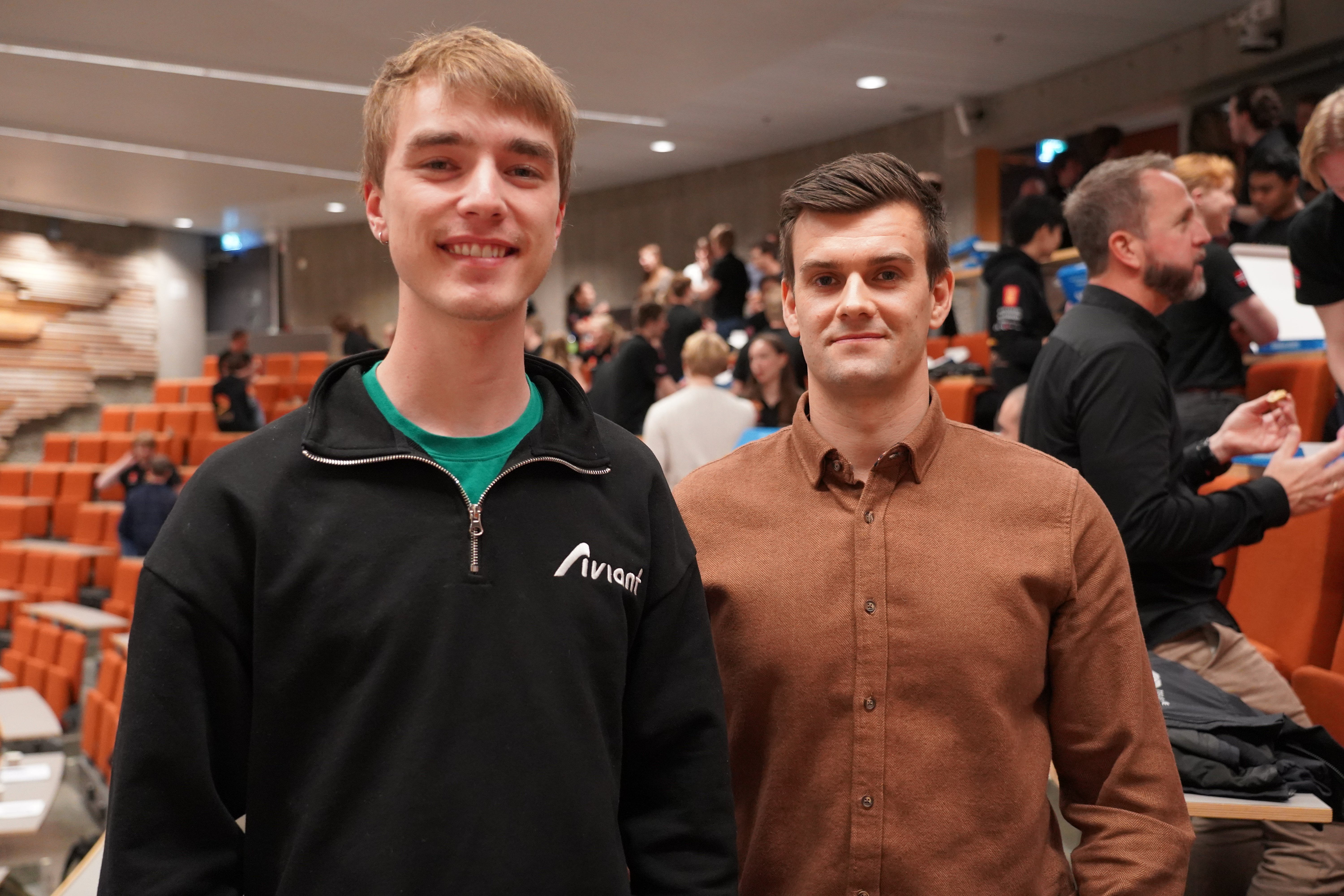
Oskar Norevik Meldal, UAV Engineer at Aviant and Aksel Sveier, Principal R&D Engineer, Autonomy and AI, at Teledyne FLIR. Photo: Lars Bugge Aarset/Fremtidens Industri
From Ascend to Norway's drone industry
For Aviant, the technical overlap with Ascend is considerable. Engineers from the company can contribute experience from solving many of the same challenges the students face.
“Aviant works with drones, so what they are doing here is highly relevant to us. We can contribute with our own experience and tell the students when a concept might not work as well as expected because we have tried it ourselves,” says Meldal.
For Teledyne FLIR, the relationship is also closely connected to the company's future need for engineers.
“We are here to show that we are engaged, but we also need more employees in the years ahead. That is part of the reason why we are here,” says Lars Erik Heimen from Teledyne FLIR.
Heimen points out that many of the challenges Ascend is tackling are highly relevant to Teledyne FLIR, even though the company's own systems operate at a considerably larger scale.
“There are a lot of talented people here with exactly the kind of experience that is relevant to us,” says Heimen.
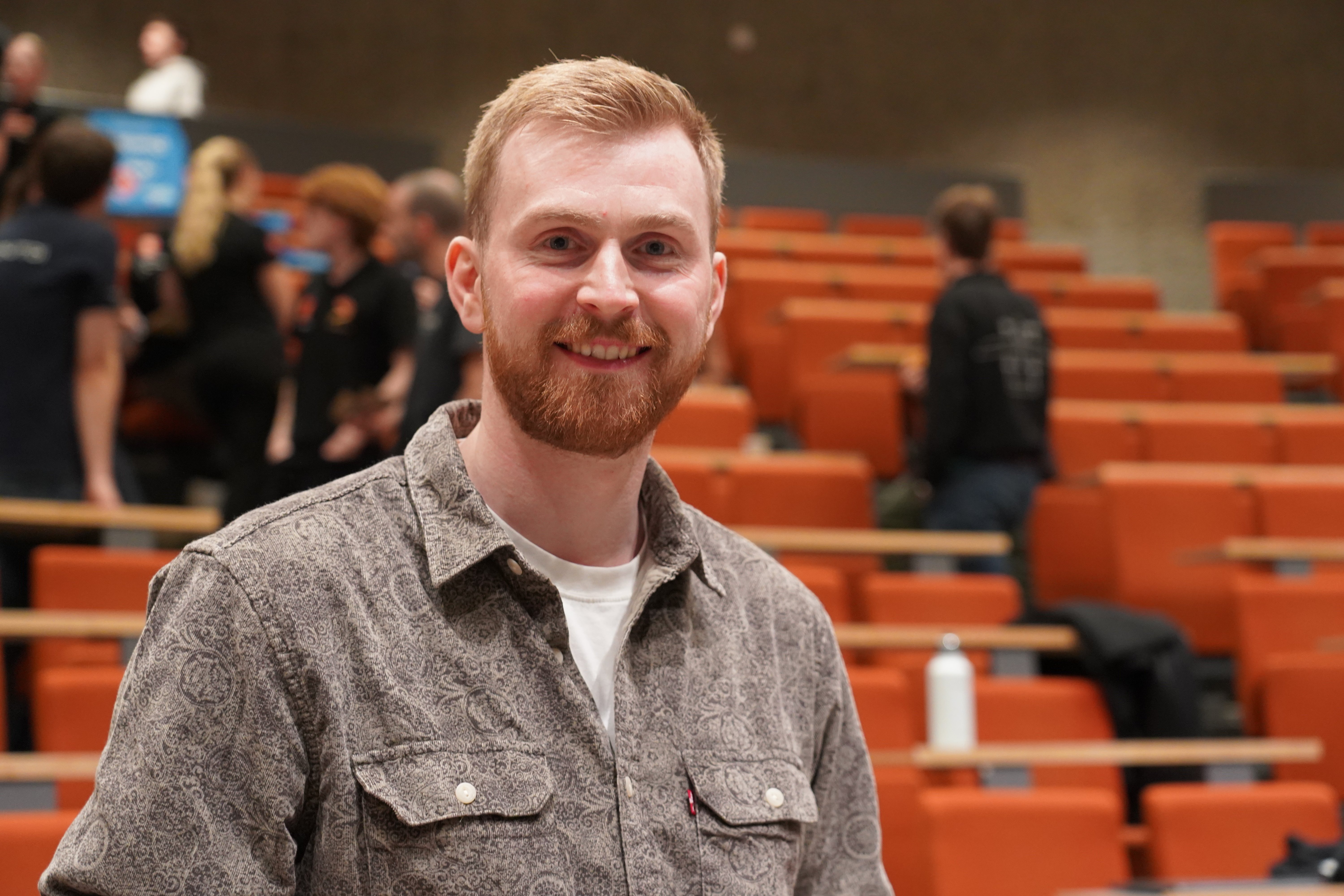
Lars Erik Heimen, Electronics Engineer at FLIR Unmanned Aerial Systems. Photo: Lars Bugge Aarset/Fremtidens Industri
And this is not only about future recruitment. The pathway from Ascend into the drone industry is already well established.
Aksel Sveier, Principal R&D Engineer, Autonomy and AI, at Teledyne FLIR, says the company has previously recruited former Ascend students.
“We develop drones ourselves and have previously hired former Ascend students. What they are doing here is very relevant to what we do at Teledyne FLIR,” says Sveier.
The relationship between Ascend and industry therefore goes both ways. Companies provide expertise, components and financial support. In return, the students gain hands-on engineering experience in technologies where Norwegian companies are actively looking for talent.
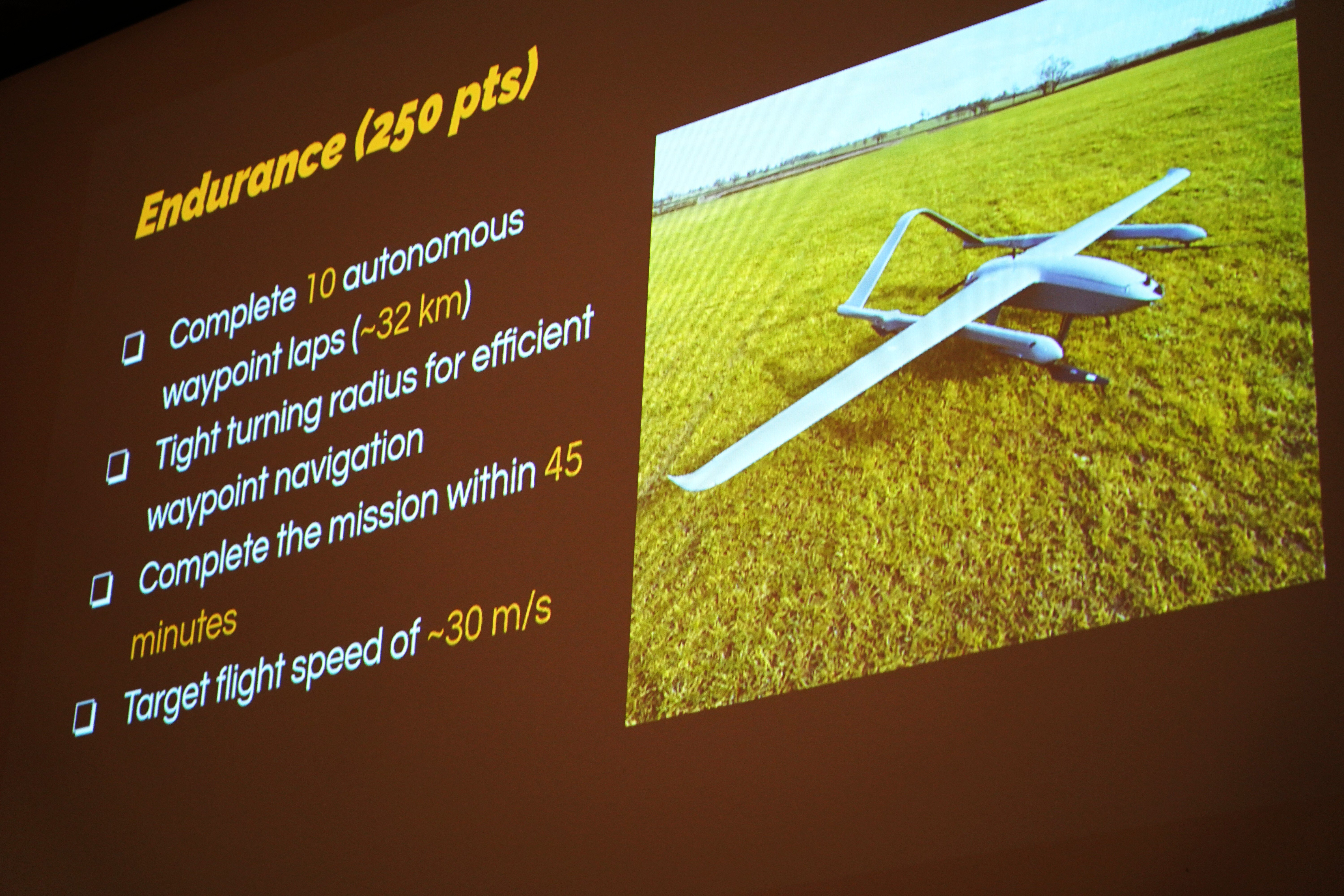
Photo: Lars Bugge Aarset/Fremtidens Industri
Twelve years at the forefront of drone technology
Ascend NTNU has worked with drone technology for 12 years. During that period, drones have moved from a relatively specialised research and technology field to becoming increasingly important systems with both civilian and defence applications.
For Weedon-Fekjær, that makes the experience students gain through Ascend more relevant than ever.
“What we contribute to is educating the next generation of drone engineers in Norway. With the investment we are seeing in drones today, it is very important to get more people into this field,” says Weedon-Fekjær.
Photo: Lars Bugge Aarset/Fremtidens Industri
The students are working with autonomous navigation, sensors, perception, communications and system integration, technologies that are becoming increasingly important across both civilian and defence applications.
Concept Review 2027 is an important milestone, but only the beginning. The concepts must now be turned into hardware and software, integrated into a complete aircraft and put through extensive testing before Ascend NTNU takes on the international competition.
The goal is ambitious: to build an autonomous aircraft capable of competing with the best.
But the impact could reach far beyond the competition itself. The students developing the aircraft today could be among the engineers developing Norway's next generation of drone technology tomorrow.
Ascend NTNU is part of a broader community of technical student organisations within NORDSEC. Ascend develops drones, Propulse NTNU builds rockets, Orbit NTNU develops satellites, and Jet NTNU works with jet engines. All four are members of NORDSEC.
"Being part of this network gives us unique opportunities to exchange knowledge and connect with the industry. These cross-disciplinary meeting places are valuable for inspiring our members and driving technological innovation," says Selina Bolme, Leader of Ascend NTNU.
More pictures from Ascend NTNU Concept review 2027
Photo: Lars Bugge Aarset/Fremtidens Industri